Hidden Numbers PRO
- 4.3
- Rating
- 10.00K
- Installs
- $0.49
- Price
 Analysis by App-foxy
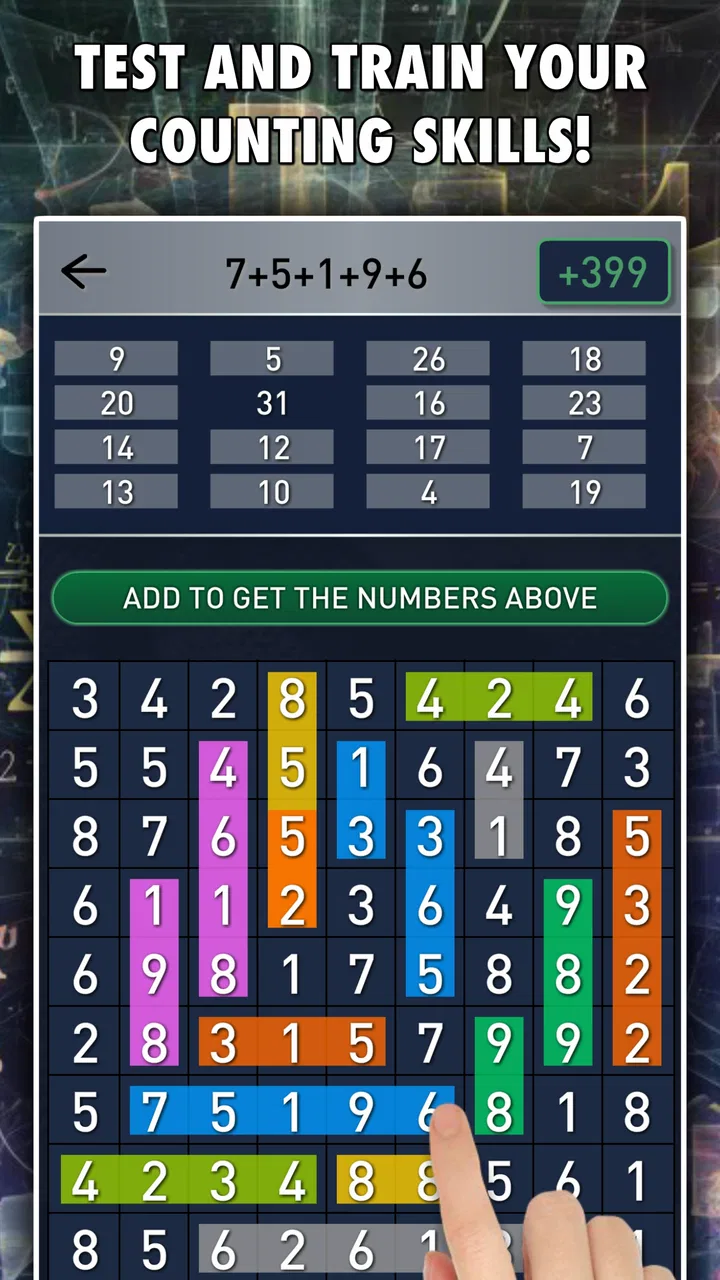
I usually approach math trivia games with a little caution. They can be useful for a quick mental workout, but many become repetitive almost immediately. Hidden Numbers PRO takes a simpler route: it turns number recognition and basic calculation into short timed or untimed challenges, with several difficulty levels to make the activity feel more like a game than a worksheet. After spending time with it, I found that its strongest quality is its flexibility. I can use it casually, compete against my own previous performance, or slow down and treat it as a focused practice tool.
This is a trivia game from LittleBigPlay - Word, Educational & Puzzle Games, aimed at players who enjoy mental arithmetic without wanting a large, complicated package. It is rated for Everyone, so it is approachable for children, families, and adults who simply want a lightweight brain-training option. The game costs $0.49, which makes it an inexpensive choice if you specifically want a small math-focused experience rather than a broad collection of puzzles.
How the game turns simple math into a repeatable challenge
The central idea is easy to understand: solve or identify numerical challenges before time runs out, or choose a mode that lets you work without the same pressure. The game offers seven timed and untimed modes, ranging from easy to hard. That combination matters more than it may sound. A purely timed game can reward quick guessing, while an untimed one gives me room to check how I am thinking and where I make mistakes.
You May Also Like

 Blood Strike: 2.5 Anniversary
Blood Strike’s Loadouts Turn Every Drop Into a Tactical Gamble
A close look at Blood Strike’s custom loadouts: how fast access to signature weapons reshapes its battle royale rhythm, rewards preparation, and narrows the gap between fights.

 Pandora - Music & Podcasts
Pandora’s Music Is Easy to Start, but Harder to Recover
Pandora’s strength is its low-effort path from a seed to a station. Its weak spot is how much confidence it asks you to place in connection, setup, and quiet recovery.

 8 Ball Pool
 Is Built on Rivalries, Rematches, and Routine
A close look at the rivalries, rematches, shared routines, and unanswered safety questions that turn a quick pool match into a persistent mobile community.

 Samsung Music
’s Quiet Strength Is Playing What You Already Own
Its reach comes less from spectacle than from dependable access to a personal library. That simplicity is both the app’s strongest retention engine and its ceiling.

 AccuWeather: Weather Radar
AccuWeather Review: A Quick, Clear Forecast for Everyday Decisions
For everyday plans, the best forecast is the one you can understand quickly. AccuWeather makes rain timing, radar, and local conditions easy to act on, with a few trade-offs.

 Hill Climb Racing
Why Hill Climb Racing Still Turns Crashes Into One More Run
A tiny car, a bumpy hill and one more upgrade: Hill Climb Racing keeps resurfacing because its simple chaos makes every near-miss feel personal.
More From Our News Desk
View All News


My preferred way to start is with an untimed mode. It gives me a chance to understand the visual presentation and the kind of answers the game expects without immediately turning every question into a race. Once the basic interaction feels familiar, moving into a timed mode creates a natural early goal: improve speed without sacrificing accuracy. That is a more useful target than simply trying to reach an arbitrary score, because it connects progress to a skill I can actually feel developing.
The short-session design also suits everyday use. I can play while waiting for an appointment, take a few rounds during a break, or use it as a quick change of pace after reading or working. It does not demand the commitment of a story-driven game, and there is no need to remember a plot, manage a character, or learn a complicated control scheme. The immediate focus is the problem in front of me.
Early goals that make the first sessions worthwhile
At the beginning, the most sensible goal is not to rush toward the hardest setting. I get more from the game by first separating two abilities: understanding the question and answering quickly. Untimed play helps with the first, while timed play exposes the second. Treating them as different stages prevents the clock from hiding whether I actually understand the material.
A practical routine is to begin with a few relaxed rounds, then switch to a timed mode and notice which errors appear. If I answer incorrectly because I misread the number, the solution is different from an error caused by slow calculation. This makes the game more useful as a personal practice tool. It is not just about winning a round; it can reveal whether my weakness is attention, recall, or speed.
For a child, an early goal might be completing an easy mode independently. For an adult, it may be maintaining concentration after several questions. Parents can also use the untimed options to keep the activity calm instead of making every session feel like a test. The same game therefore supports different starting points without requiring a separate learning system for each player.
What progress feels like when there is no elaborate campaign
Hidden Numbers PRO does not need a large narrative or a long list of characters to create a sense of movement. The clearest progress signal comes from the contrast between modes and difficulty levels. If I can complete an easier challenge comfortably, the next meaningful step is to attempt a harder one or bring the timer into the routine. The structure encourages me to measure improvement through confidence and consistency rather than through a fictional reward track.
That approach is both a strength and a limitation. I appreciate that the game keeps attention on the math instead of covering it with layers of menus or collectible systems. At the same time, players who need frequent unlocks, badges, story scenes, or visible milestones may find the progression understated. The reward is mainly the satisfaction of handling a tougher challenge, so motivation depends on whether that kind of self-directed improvement is enough for you.
I recommend keeping a simple mental note of the modes that feel comfortable and the ones that still cause hesitation. Even without turning the experience into formal study, this creates a personal progression path. You might begin by aiming for correct answers in an easy untimed setting, then work toward reliable results under a timer, and finally test a harder mode. This is a more sustainable approach than jumping straight to the most demanding option and deciding the game is unfair after a few rushed mistakes.
The difficulty curve rewards patience more than bravado
The range from easy to hard gives the game room to accommodate different levels of confidence. In my experience, the important trade-off is clear: timed modes increase excitement and expose hesitation, while untimed modes are better for learning the patterns and building accuracy. A player who is comfortable with arithmetic may enjoy the pressure immediately, but someone using the game for practice should not treat the timer as the only measure of ability.
The difficulty curve works best when I move gradually. Easy challenges let me establish a rhythm. Medium difficulty can then test whether that rhythm survives more demanding questions or less familiar combinations. Hard play is most valuable after the earlier stages have become comfortable, because otherwise the clock and the calculations compete for attention at the same time.
This also affects how I judge a session. A slower but accurate round can be a positive result if I am learning a difficult mode. Conversely, a fast round filled with guesses does not represent meaningful progress. The game’s design leaves that interpretation to the player, so a little discipline improves the experience considerably.
One useful technique is to alternate pressure and recovery. I might play a timed round, then follow it with an untimed round to examine the type of problem that caused trouble. This prevents frustration from building and gives the brain a chance to switch from reaction speed back to careful reasoning. It is a small habit, but it makes the seven-mode structure feel more purposeful.
How the timer changes the pace
Timed play gives the game its strongest competitive energy. Even simple calculations feel different when the available thinking time is limited. I become more aware of hesitation, and familiar operations begin to feel satisfying when I can complete them without stopping. This makes the game suitable for short bursts when I want concentration rather than passive entertainment.
The downside is that the timer can turn a learning session into a stress session. If you are looking for a gentle educational activity, the untimed modes are the better starting point. They let you focus on the numbers and build confidence before introducing urgency. I would also avoid judging younger players only by timed performance, since careful reasoning is valuable even when it is slower.
Compared with a standard calculator, the game is much better at creating attention and repetition, but it is less useful when the goal is simply to obtain an answer. Compared with broad trivia apps, it offers a narrower subject and less variety, yet that focus can be an advantage for someone who specifically wants math practice. Compared with flashcards or paper exercises, it adds immediate interaction and time pressure, although it may feel less flexible for creating your own question sets.
Where retention comes from—and where it may fade
The game’s ability to keep me returning depends mainly on challenge rather than on a large reward structure. I come back when I feel that a particular mode is almost within reach: perhaps I can solve it accurately without a timer, but still slow down too much when the clock is active. That small gap creates a clear reason to try again.
This is a healthy kind of retention for a math game because it is tied to personal improvement. There is no need to spend a long session at once. A few focused attempts can be enough, and taking a break may even help more than repeatedly forcing the same difficult round. The compact format makes it easy to build the game into a daily routine without allowing it to take over the day.
However, the same simplicity may reduce long-term appeal for players who need constant novelty. If you prefer games with changing environments, extensive unlock trees, or social competition, this may feel limited after the initial curiosity fades. Its replay value comes from mastering the available modes and difficulty range, not from discovering a continually expanding world.
For me, the best retention strategy is to give each session a narrow purpose. One day I might focus on accuracy in an untimed mode. Another day I might test whether I can keep calm under the timer. A third session could be dedicated to trying a harder level without worrying about speed. This prevents the experience from becoming a vague cycle of starting and stopping with no sense of direction.
Who will get the most from this math trivia game
I would recommend it to students who want extra arithmetic practice, adults who enjoy quick mental challenges, and families looking for a simple game that does not depend on violent themes or complicated controls. The Everyone rating makes it broadly approachable, while the easy-to-hard structure means players do not have to begin at the same level.
It can also work well as a warm-up before studying. A short untimed session may help shift attention toward numbers, while a later timed round can provide a compact concentration exercise. I would not present it as a replacement for a teacher, textbook, or full mathematics course, but it can make repetition less dull and encourage players to engage more actively than they might with passive review.
The game is less suitable for someone who wants detailed explanations after every mistake, a structured curriculum, or advanced mathematical topics. It is also not the best choice for a player whose main motivation comes from collecting rewards or following a story. Those users may prefer a larger educational app or a trivia platform with broader subjects and more elaborate progression.
A realistic way to use it during an ordinary day
Imagine a student has ten minutes before leaving for school. Instead of opening a general entertainment game, they begin with an untimed mode to solve a few problems carefully. On the way home, they try a timed mode and notice that the mistakes happen when they rush rather than when the calculations are difficult. Later, they return to an easier setting and practice answering cleanly. That routine uses the app as both a calm exercise and a speed challenge without pretending that every session must be competitive.
An adult could use it similarly during a work break. The goal would not be to reach the hardest setting immediately, but to interrupt a long period of screen work with a different kind of attention. Because the game is focused on numbers, it offers a sharper mental change than scrolling through another feed. The key is keeping the session short and purposeful, especially if timed play starts to feel irritating rather than energizing.
Practical expectations before paying
The $0.49 price is easy to understand: this is a small, focused purchase for a specific type of game. I would choose it when I already know that math challenges appeal to me and I want a compact option. I would not buy it expecting a broad trivia library, a full educational program, or the production scale of a major commercial game.
It was released on Jul 29, 2018, and supports a minimum operating system of Android 2.3. That broad compatibility is useful for people using older Android hardware, particularly if newer games are unavailable on their device. The trade-off is that players seeking modern presentation or constantly evolving content may find the experience modest.
The game has passed 10K+ installs, with a 4.3 average from around 195 ratings and 10 written reviews. Those figures suggest that it has found a small audience and is generally well received, but I would still base the decision on the style of play rather than popularity. A focused math game can be a good fit for one person and completely uninteresting to another.
My verdict on goals, challenge, and pacing
Hidden Numbers PRO succeeds because it understands that a math game does not need an elaborate progression system to be useful. Its early goals are straightforward, its progress signals come from moving between difficulty levels and timed pressure, and its pacing works especially well in short sessions. The seven modes give me enough room to change how I play depending on whether I want practice, concentration, or a quick challenge.
The main weakness is equally straightforward: the long-term motivation is mostly self-generated. Players who enjoy measuring their own improvement will have a reason to return, while players waiting for frequent unlocks or dramatic rewards may lose interest. The timer can also create unnecessary pressure if used before the underlying skills are comfortable, so I strongly suggest beginning with untimed play.
For my money, this is a worthwhile little purchase for anyone who wants accessible math trivia with both relaxed and competitive pacing. I especially like it as a repeatable five- or ten-minute exercise rather than as a game I would play for hours. If that sounds like your kind of challenge, the low price and broad device compatibility make it easy to recommend. If you need explanations, a full lesson plan, or a constantly changing reward system, I would choose a more comprehensive educational alternative instead.
FAQs for Hidden Numbers PRO
01What is Hidden Numbers PRO and how does the game work?
Hidden Numbers PRO is a puzzle and observation game focused on finding numbers concealed within detailed images or visual scenes. After installing it, players examine each level carefully and tap the numbers they discover. The challenge generally becomes harder as the numbers blend into backgrounds, patterns, and objects. It is designed for casual play, concentration, and improving visual attention rather than fast reflexes.
02Is Hidden Numbers PRO free to download and play?
The availability and pricing of Hidden Numbers PRO can vary depending on whether you download it from Google Play or the Apple App Store. The “PRO” label commonly indicates a paid version or an edition with fewer advertisements and additional content, but the exact purchase conditions should be checked on the store page before downloading. Review the listed price, in-app purchases, and refund policy for your platform.
03Does Hidden Numbers PRO work offline?
Hidden Numbers PRO may be playable without a continuous internet connection once the application and its required content have been installed. Offline access is useful when traveling or when you want to play without using mobile data. However, an internet connection may still be required for the first download, updates, advertising, synchronization, or restoring purchases. Test the game in airplane mode to confirm its current offline behavior.
04Is Hidden Numbers PRO suitable for children and families?
The hidden-number format is generally simple enough for children, teenagers, and adults, and it can encourage patience, visual scanning, and concentration. Nevertheless, parents should check the age rating, privacy information, and any advertising or purchase features shown on the store listing. Some levels may be difficult for younger players, while adults may enjoy the game as a relaxed brain-training or spot-the-detail activity.
05What should I check before downloading Hidden Numbers PRO?
Before downloading Hidden Numbers PRO, check that your Android or iOS device meets the listed operating-system requirements and has enough free storage. Also review the latest update date, developer information, permissions, screenshots, user reviews, and whether the game contains ads or in-app purchases. Because store versions can change, confirming these details first helps avoid compatibility problems and unexpected costs.
Pros
- Improves visual attention and number-recognition skills.
- Short sessions make it easy to play during quick breaks.
- Progressive challenges help maintain motivation over time.
- Minimal interface keeps the focus on finding hidden numbers.
- Suitable for players who enjoy quiet
- concentration-based puzzles.
Cons
- May feel repetitive once the puzzle patterns become familiar.
- Small or subtle numbers can be difficult to spot on phones.
- Limited appeal for users seeking action or varied gameplay.
- Some levels may seem frustrating without hints or assistance.
- Performance and availability may vary across older devices.

Hidden Numbers PRO
Gallery